

Heat input, ferrite balance, contamination and pickling: where duplex spools go wrong and how a shop prevents it.
Duplex 2205 is chosen for strength and chloride resistance, but both depend on how the spool is welded and finished. Four controls make the difference.
Heat input and interpass temperature. Too little heat leaves too much ferrite in the weld, too much heat and repeated passes encourage harmful phases. Qualified procedures set a heat input window and a maximum interpass temperature, and welders record both.
Ferrite balance. The aim is a balanced mix of austenite and ferrite in weld and heat affected zone. Projects usually specify an acceptance range and how it is measured, by ferrite meter on the finished weld or by metallography on the procedure test.
Contamination. Carbon steel dust and tools embed iron in a stainless surface, and it rusts later. Duplex work belongs in a bay kept apart from carbon steel, with its own grinding discs, brushes and handling equipment.
Pickling and passivation. Welding leaves heat tint and a damaged surface layer. Pickling removes it and passivation restores the protective film, so the spool reaches site with its corrosion resistance intact.
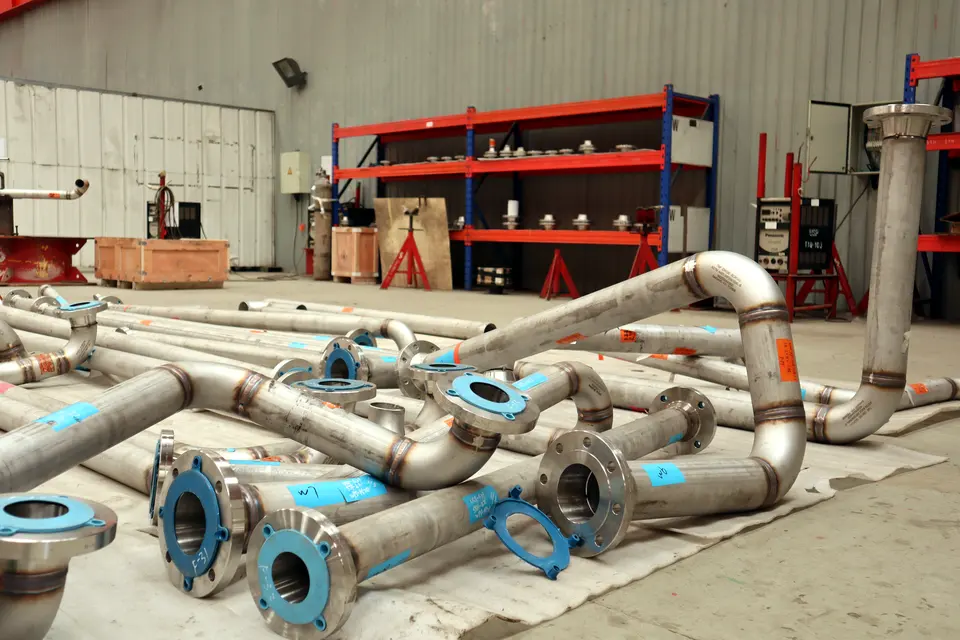
At USP, duplex and stainless spools are fabricated in bays segregated by metallurgy, to procedures qualified for 2205, with pickling and passivation through a qualified partner.
Send your
drawings.
Drawings or BOQ, code, material, deadline.