

What fatigue purpose welding requires from a fabricator, and the evidence to ask for before the order.
AS/NZS 1554.5 is the part of the Australian and New Zealand structural welding series that covers steelwork carrying high levels of fatigue loading, and it calls those welds fatigue purpose, category FP. If your drawings call up FP welds, the shop has to produce a tighter weld than structural purpose work, prove it with more inspection, and leave records an inspector can still check a year later.
What the standard is actually asking for
Part 1 of the series covers general structural welding and its two weld categories, SP for structural purpose and GP for general purpose. Part 5 covers structures where the stress range is high enough that fatigue governs, and it applies to steelwork built to AS 3990, AS 4100 or NZS 3404.1. Bridges, crane runways, hoists, vibrating screens, grizzly frames, chutes and bins all sit here.
Fatigue is not a strength problem. A joint that passes every static check still cracks if the weld toe, the weld profile or a stray attachment puts a notch where the stress range is highest. The designer assigns a detail category to each joint, and that choice already assumes a weld of a given quality. FP is how the fabricator delivers what the designer assumed.
Where fatigue rated work goes wrong
Weld toes and profiles. Fatigue cracks start at the toe. A sound full throated weld that blends into the parent metal, essentially free of undercut and deep craters, buys more fatigue life than extra throat thickness.
Discontinuities lying across the stress. A pore or a lack of fusion running along the stress does far less damage than the same flaw lying across it. For fatigue work the inspection report has to record where an indication sits and which way it runs, not only how big it is.
Backing bars and temporary attachments. Permanent backing left at the root is a built in notch. Lifting lugs, erection cleats and fit up tacks become part of the fatigue life of the member whether or not they appear on the drawing, so they need the same procedures and the same welders, and where they are removed the surface has to be dressed and checked.
Starts and stops. Porosity and lack of fusion collect at arc starts. Run on and run off tabs move them off the member, and the edge is dressed after the tabs come away.
Cut edges and holes. A flame cut edge in a tension zone carries its own fatigue category. The cutting process and the condition of the cut face belong in the procedure, not in a shop decision taken on the day.
What to ask an overseas fabricator for
Ask before the order, not at inspection. Welding procedures qualified for the joints actually on your drawings, covering the material grade, the thickness range and the position you need, and welders qualified to those procedures.
An inspection and test plan that names the FP joints, states the method and extent of inspection for each, and marks the hold and witness points you or your third party inspector can attend.
Visual inspection recorded joint by joint, by someone other than the welder who made it. Toe and profile are a visual acceptance before they are ever an NDE one.
NDE reports that give indication type, size, position and orientation, with the qualification of the operator attached.
Material certificates traceable to the heat, EN 10204 3.1 as a minimum, tied to the member mark. A weld numbering scheme, so an indication found two years later leads back to the procedure, the welder and the day.
What to send us to price it
Drawings with the weld categories and detail categories marked, material grades, the NDE scope, the coating specification, quantities and the delivery date. If the weld categories are not marked yet, send the design code and the loading and we will tell you what we read from it rather than price a guess.
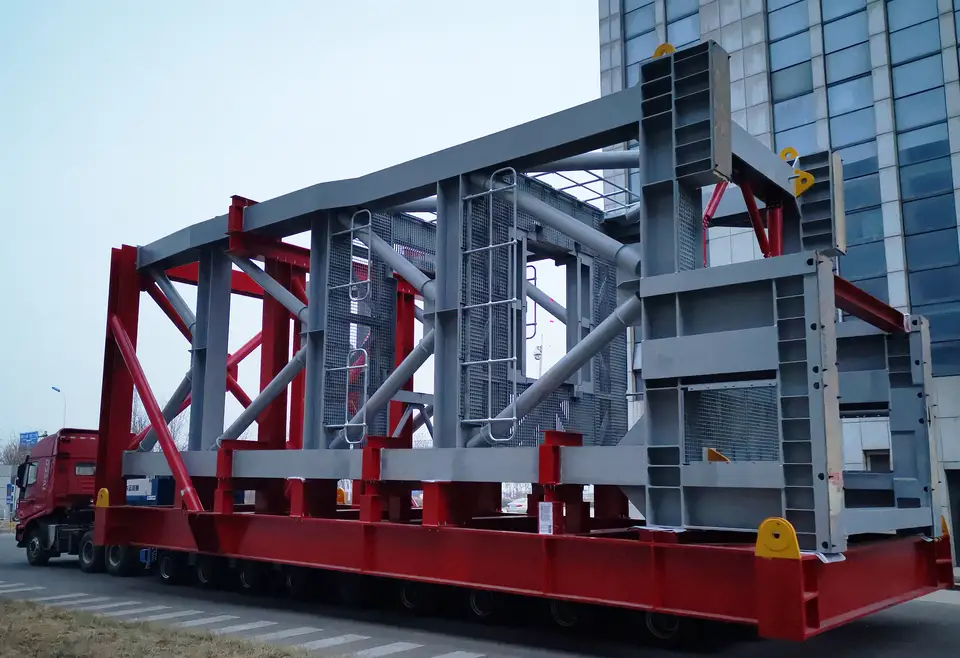
At USP, fatigue rated structures are welded to AS/NZS 1554.5 by direct hire welders qualified to the procedure, under a welding quality system certified to EN ISO 3834-2, certificate valid to November 2028. AS/NZS 5131 work is executed to the project inspection and test plan. Conveyor and transfer frames, grizzly frames, bins and chutes are regular work here. Steel leaves painted, FOB or FAS Tianjin. We do not carry out site installation.
Common questions
Is AS/NZS 1554.5 the same as AS/NZS 1554.1?
No. Part 1 covers general structural welding with the SP and GP weld categories. Part 5 covers structures where fatigue governs the design and uses the fatigue purpose category FP, with tighter acceptance and more inspection.
Can a Chinese fabricator weld to AS/NZS 1554.5?
Yes, provided the procedures are qualified for the joints on your drawings, the welders are qualified to those procedures, and the inspection regime is written into the inspection and test plan before work starts. Ask for the qualification records rather than a statement of compliance.
Does FP mean every weld is radiographed?
No. The method and extent of inspection come from the standard and from your project specification, joint by joint, which is what the inspection and test plan is for. Expect more inspection than SP work and expect it defined per joint rather than as one blanket percentage.
Who decides which welds are FP?
The designer. The detail category assigned to a joint carries an assumed weld quality, and the fabricator delivers and proves it. If a drawing is silent, ask the engineer of record rather than assume SP.
Send your
drawings.
Drawings or BOQ, code, material, deadline.